
Notes from the Workshop
Collector's Knives and Their Value Over Time
In a world of mass production, true rarity becomes value. A handmade hunting knife isn't just a tool: it holds time, skill, and its maker's story. The Ratel is made in a limited run of 441 pieces. Every knife is part of a closed project that, over the years, can take on collector's, family, and emotional significance.

Table of contents
Why handmade knives carry collector's value
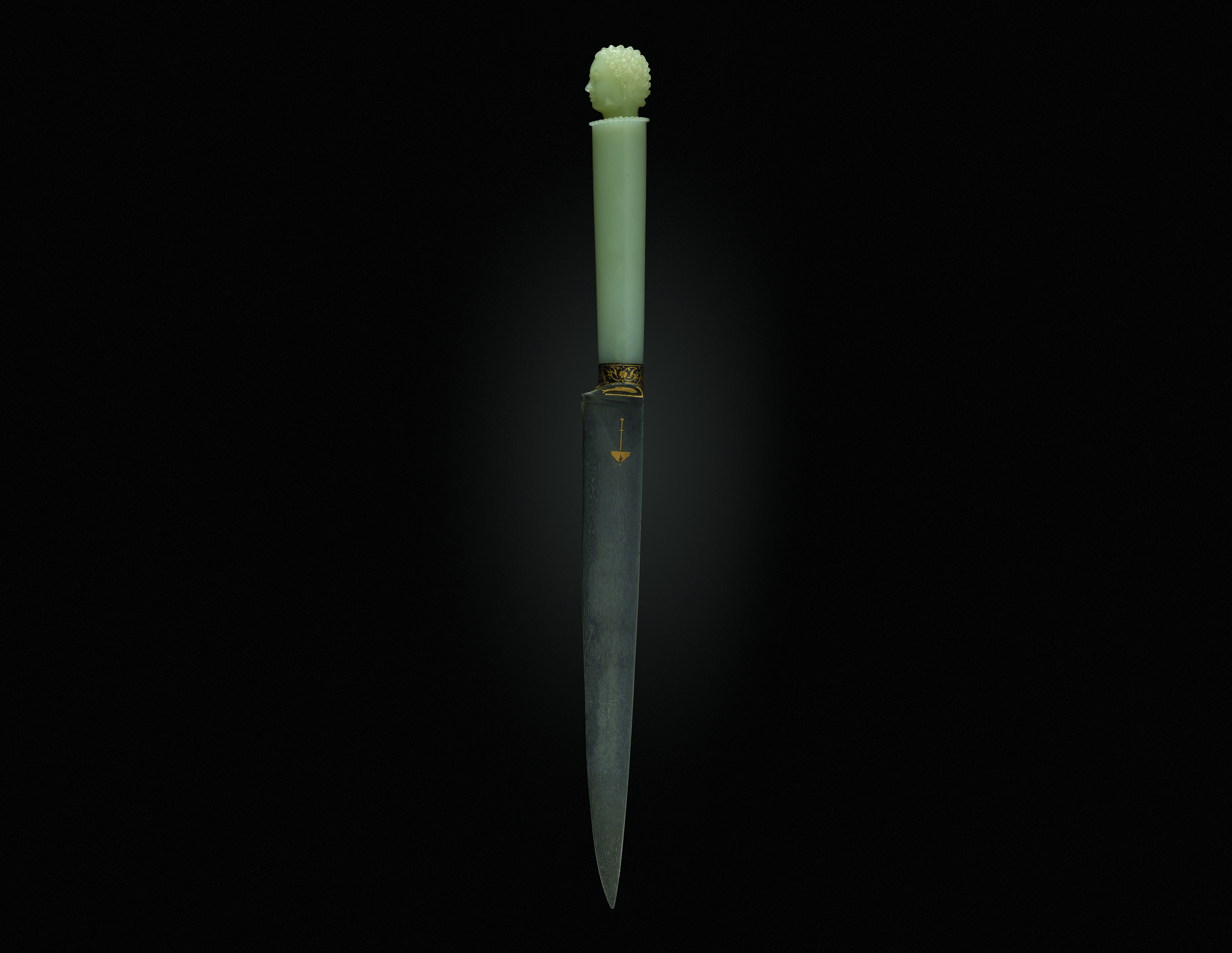
Fig. 1. Shah Jahan's dagger; photo from https://www.christies.com/en/lot/lot-6212124
There's no way to know exactly what this dagger was worth four centuries ago. But we know for certain that its value has increased many times over since then. In 1974, it was officially sold at auction for the first time and entered the private collection of Qatar's royal Al Thani family. The 1974 price isn't publicly known, but we do know that in 2019 it sold at auction for a staggering sum of nearly $3.5 million, against a pre-sale estimate of $1.5 to $2.5 million.
It's an extreme example of how an object can gain value over time because of its fascinating history, its noble first owner, and, of course, the skill behind its making. Notice that in this case, the maker of the dagger is unknown; the piece's value wasn't tied to a specific person.
Bob Loveless: a respected name, and a price to match
Now, a different kind of example. Let's look at how knives by the legendary Bob Loveless gained value from the start of his career in the 1950s to today.
Loveless sold his first knife in 1954 for just $14. In the 1960s, a widely read article in Guns & Ammo introduced Loveless to a broad audience as a master on par with legends like Morseth and Seguine. From that point on, his work steadily gained value, reaching prices as high as $650. Even then, Loveless himself said that a knife he made might be worth $200 on its own, but his name added another $450.
By the 1980s, the waiting list for a commission stretched to five years, and prices were already climbing into the thousands of dollars. 1985 brought Loveless a formal crowning achievement: induction into the Blade Magazine Cutlery Hall of Fame. That moment shifted his work, once and for all, from the category of tools into the category of functional art. By the time of his death in 2010, individual pieces were fetching $20,000. Blade Magazine Cutlery Hall of Fame. To ostatecznie przesunęło jego twórczość z kategorii narzędzi do kategorii dzieł sztuki użytkowej. W chwili śmierci w 2010 roku pojedyncze egzemplarze osiągały ceny 20.000 dolarów.
Today, Loveless knives command even higher prices. A standout example is the Stag Lawndale Sub-hilt, which sold at auction in 2023 for $85,000. It's a knife from the Lawndale period — the golden age of the Loveless shop — with a stag antler handle (a material Loveless used only rarely) and his signature sub-hilt. Stag Lawndale Sub-hilt, który na aukcji w 2023 roku uzyskał cenę 85.000 dolarów. To nóż z okresu Lawndale, czyli ze złotego wieku warsztatu Loveless’a, z rękojeścią z poroża jelenia (materiału, którego Loveless używał wyjątkowo rzadko) i charakterystycznym sub-hiltem.

Why is the price so high?
A lot goes into it: a rare model, an unusual handle material, and of course the reputation of a maker regarded as the father of modern custom knifemaking. And above all that sits the simplest fact of all: Loveless has been gone since 2010. He'll never make another piece. There may be other factors driving the price, but perhaps only the person bidding on, and buying, the knife at that moment really knows.
Notice that in this story, the knife's value depended above all on the person who made it. Without the maker, without a name known around the world, this knife would be worth a fraction of what it is today.
So, let's think about it...
Are knives a good investment?
I get this question from time to time. The examples above show that, under the right circumstances, knives can gain substantial value over time. What do these two examples have in common? A unique history, a high level of craftsmanship, and a piece's condition holding up over many years. In the case of Shah Jahan's kard, the owner's history was key. In the case of the Stag Lawndale Sub-hilt, it was the reputation of the craftsman who made it that drove the high value.
By my estimate, that same Bob Loveless Stag Lawndale Sub-hilt might have cost around $1,000 back in the 1960s — a lot of money at the time. At its 2023 sale price of $85,000, that's more than an eighty-fold increase. That looks pretty solid at first glance. To put it in perspective, let's compare it to an investment in gold. In 1960, that $1,000 would have bought roughly 28 ounces of gold. By 2023, those same 28 ounces would have been worth around $55,000. A fifty-fold increase is a solid investment, but the Loveless knife came out ahead in this particular matchup. I'm making this comparison a little tongue-in-cheek, of course, since these are two completely different worlds. The knife may have won, but the investment risk that came with it was far higher. Who could have known, at the moment of purchase, that Bob Loveless would become such a well-known figure, and that his knives would carry so much collector's value?
Of course, I made this comparison with a grain of salt, because they’re two completely different worlds. It’s true that the knife came out on top, but the investment risk associated with it was much higher. Who could have known, at the time of purchasing that knife, that Bob Loveless would become such a well-known figure and that his knives would have such high collector’s value?
The Ratle Knife as an Investment
The Ratel is a knife built to last
There Will Be 441 Ratel Knives
Each knife comes from a numbered series
A Unique Combination
Value Increases Over Time