
On Knives and Craftsmanship
How is a handmade knife made?
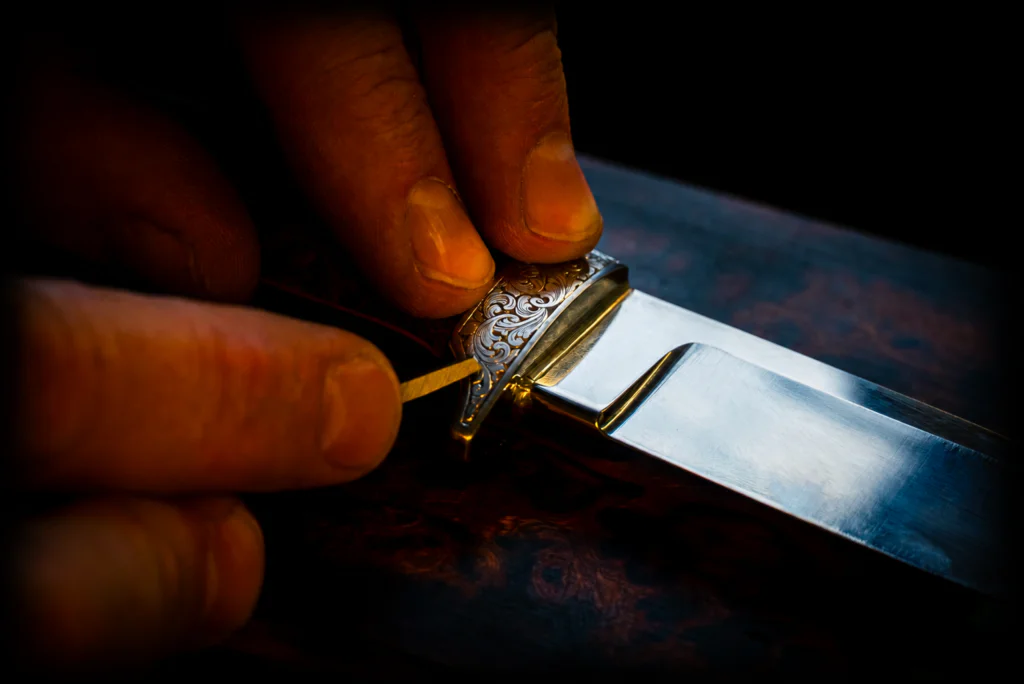
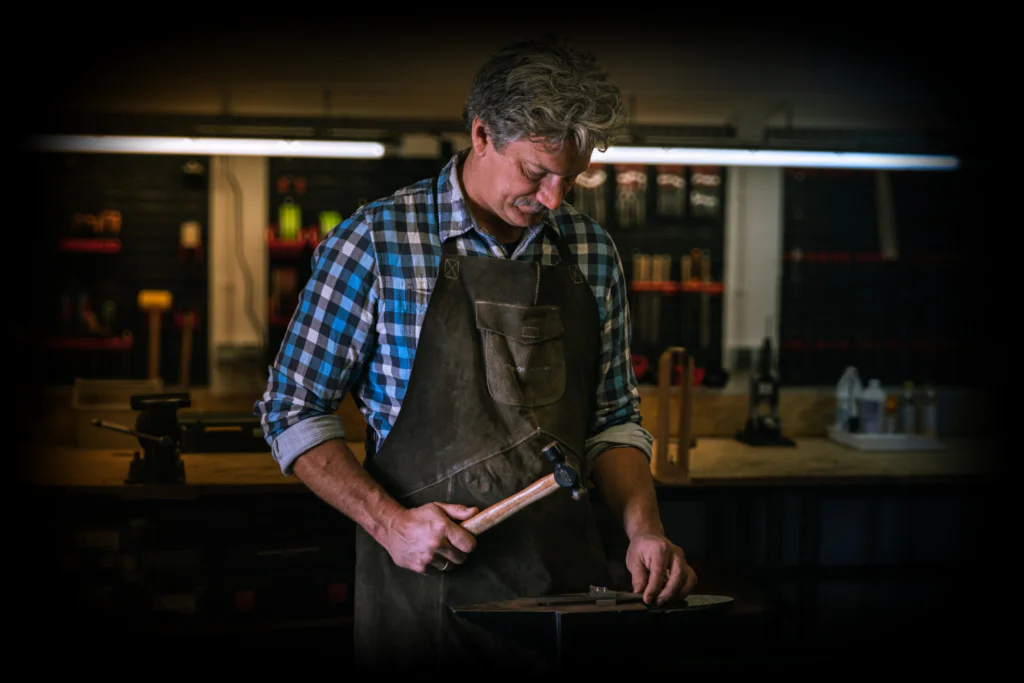
A handmade knife comes together through a process that includes design, material selection, steel work, handle construction, and final finishing. Every stage is carried out with great precision by one person, who's responsible for the entire piece.
Unlike mass production, this process isn't automated — it takes time, experience, and control over every detail. → I cover this in more depth in the essay: How a Handmade Knife Is Made
What's the difference between a handcrafted knife and a factory-made one?
A handcrafted knife is made in a limited run, with full control over every stage, from design to finishing. In mass production, what matters most is consistency and output — not individual character.
The difference isn't always visible in a photo, but it becomes clear in use, balance, and the quality of the details. → I go into this further in the essay: What Sets a Handcrafted Knife Apart from a Factory-Made One
What's the best steel for a hunting knife?
How do you choose a good hunting knife?
Is a handmade knife more durable than a factory-made one?

Value and Collecting
Can a knife have collector's value?
Does a limited series increase a knife's value?
It's precisely that fixed number that gives the whole series its significance.
Do handmade knives gain value over time?
Is it worth using a collector's knife?
Yes — many people believe that it's actually using an object that gives it history. Signs of use don't have to lower its value; they often deepen it.
This mindset turns a knife from something "to look at" into something genuinely lived with.
Why is only a specific number of copies produced?
Gifts and Personalization
Czy nóż to dobry prezent dla myśliwego?
In the hunting world, a knife is one of the most symbolic and practical gifts you can give. It's a tool that goes along on real trips and real hunts, but it's also an object of real personal significance.
That's why a well-made knife can be a gift for life.
→ More on this in the essay: An Exceptional Gift for the Hunter
What gift should you choose for a hunter?
The best gift is one that's both useful and personal. In that sense, a handmade knife combines the value of a tool with symbolic meaning.
Especially when it can be fitted or personalized to the recipient.
→ I go into this further in the essay: An Exceptional Gift for the Hunter
Can I order a knife with engraving?
Is a handmade knife a good gift?
Yes, especially because it combines craftsmanship with uniqueness. In a world of mass production, an object made by hand carries a completely different meaning.
It's a gift that doesn't need any extra explanation.
→ I write about this in the essay: An Exceptional Gift for the Hunter
Does personalization affect a knife's value?
Personalization means the object is no longer anonymous. It doesn't have to lower it — in many cases it increases the personal value and significance for the owner.
In a collecting context, that often matters more than perfect "neutrality."
→ I explain this in the essay: Collector's Knives and Their Value Over Time
Ordering, the Atelier, and Fulfillment
How does ordering a knife from the atelier work?
Why isn't there an online shop with a cart?
A handcrafted knife is made in a limited run, with full control over every stage, from design to finishing. In mass production, what matters most is consistency and output — not individual character.
The difference isn't always visible in a photo, but it becomes clear in use, balance, and the quality of the details. → I go into this further in the essay: What Sets a Handcrafted Knife Apart from a Factory-Made One
→ I go into this further in the essay: Handcraft vs. the Machine
Can I order a fully custom knife?
Do you offer knife servicing and sharpening?
Is every piece unique?
Yes — even within the same series, every knife differs in the details that come from hand work and natural materials.
Those differences are exactly what give each one its individual character.
→ I go into this in the essay: The Road to the Ratel Hunting Knife