Notes from the Workshop
Handcraft vs. the Machine
In a world of things that are fast, cheap, and easy to replace, a handmade knife becomes something more than a tool. It's a record of human work — of a maker's attention, experience, and intent. That's why Zdunek Knives doesn't run mass production, but instead makes individual knives, slowly, by hand, built to outlast their maker.
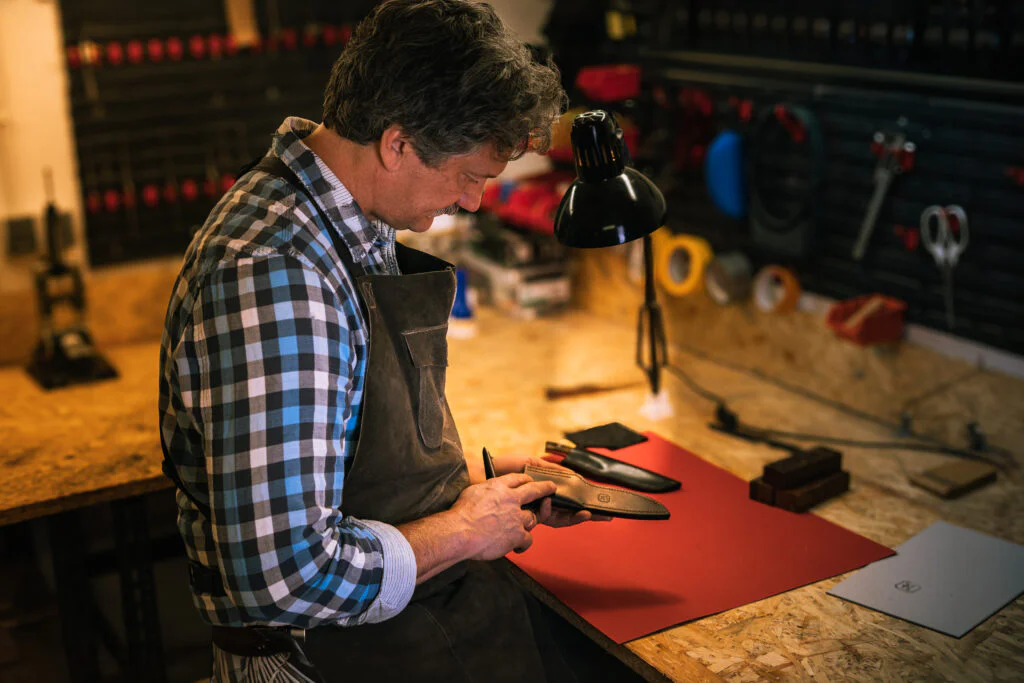
Table of contents
A world of fast, disposable things
What times we live in. We carry smartphones in our pockets — small devices that have become part of us. We don't just talk through them; we run businesses, take photos and videos, check our location. More and more, we simply live inside them. When the battery dies, it can feel like the world has stopped. We don't know what to do. We can barely breathe without the thing.
We're surrounded by things we buy cheap, that break quickly, and that are easier to replace than to fix. Everything's supposed to be available right now. Plastic, repeatable, disposable, temporary. And it's not just objects that look this way sometimes — relationships between people can start to as well. The world's gone a little crazy. And yet, the more we're surrounded by things like this, the more we start craving something real. Something that wasn't made just to be sold, used up, and replaced by the next copy.
Craving for calm
I was born in a big city. That's where I grew up, went to school, made friends, played sports, went to college, worked, started a family, took out a mortgage, and before long, I was running like a rat in the race for money. Constant stress, alcohol, cigarettes, hectoliters of coffee. My mind and body were getting worse by the year, even though I was only in my thirties. A story like many others.
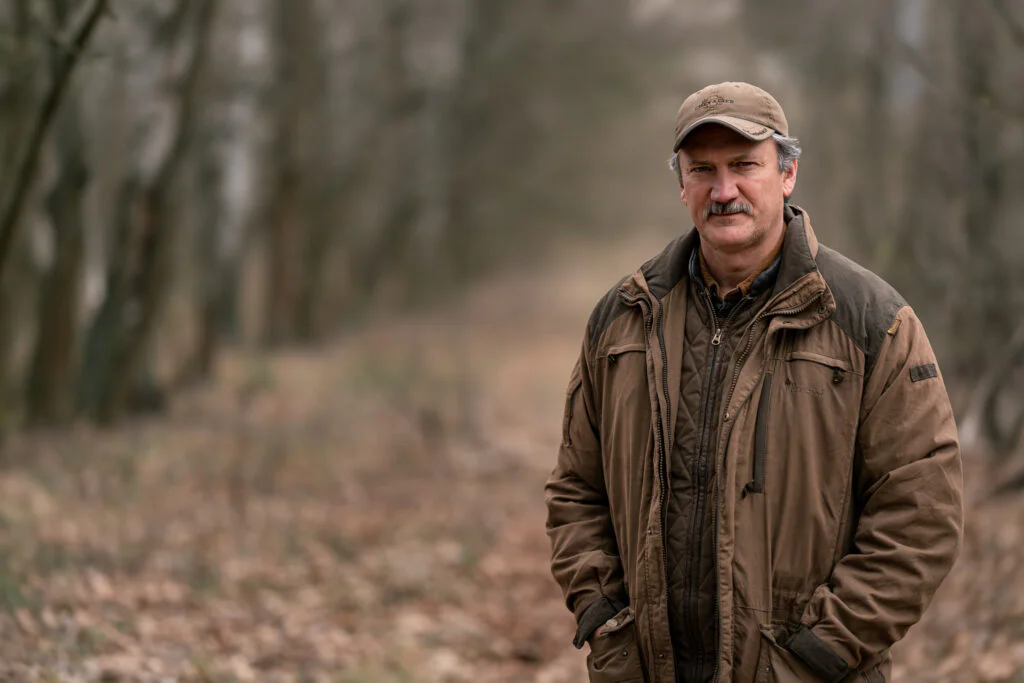
But at some point, I thought: something is very wrong with my life. I couldn't quite put a name to it yet, but I could feel that if I kept going down that road, I wasn't going to get very far. I started craving calm. A sense of inner balance. Being someone who's genuinely smiling, content, and happy day to day — not only after a bottle of good wine. My thoughts kept circling around a quieter life. Closer to nature, closer to the earth, closer to family. Away from the world racing by. Free, independent, calmer.
Where did that feeling come from? Was it a longing for nature, planted in me by my father the first time he took me hunting? Or did my exhausted, poisoned body trigger some kind of defense mechanism — an ancestral memory of people who lived closer to the land and in greater harmony with the world around them? Maybe it was both. All I know is that it was a very powerful feeling. It guided me in ways I couldn't fully see, and it brought me to the place where I am now. It was the driving force behind some hard decisions: breaking bad habits, stepping back from the family business, and setting out on my own path.
I never fully lived out the dream of country life in the literal sense. I don't run a farm; I don't have cows, pigs, or a fishpond. But I live with my family in a beautiful, green, small town, among old trees, birds, and squirrels. I don't grow my own food, but I have access to it at the local market. As a hunter, I bring wild game to my family's table. And next to the house, I have my own workshop, where I get to be an artisan, making knives.
Handcraft as a return to roots
I think a longing for freedom, for calm, for what's natural, lives in every one of us. For me, handcraft is a person's return to their roots — to what's original, personal, and real. People have always used their hands. Without the work of hands, we wouldn't have anything to eat, anywhere to live, anything to keep us warm, or any tools to work with. Everything we have started, at some point, with a human thought, a human need, and a human hand.
As an intelligent species, humans have always pushed to do things better, faster, and cheaper. We call that progress. We built, and keep building, tools that make us more efficient. Machines came along, then calculators, computers, robots, CNC, the internet, and now artificial intelligence, which is reshaping our lives. Thanks to the tools we've created, the amount of work done by human hands keeps shrinking. And so does the number of craftspeople.
But here's the interesting part: when a person is burned out, exhausted, and lost, relief is often found precisely in creative work. Some people take up painting. Others play an instrument, grow vegetables, or work in wood, leather, or steel. It's as if, after all this rush toward modernity, people still end up finding their way back to their own hands.
The knife: one of humanity's oldest tools
What's the real difference between work done by human hands and work done by a machine? And what does that difference mean for us? For me, the clearest answer is found in the knife. A knife has always mattered to people. A handmade knife is one of the oldest tools in existence, one that's been with us since the dawn of history. At first, it was just a shaped piece of stone. Later, stone was joined to a handle of wood or bone. Over time, people learned to forge steel, temper it, hammer it, and work it.
Blacksmiths made knives, swords, and other edged weapons. Later, part of that work was taken over by large mills and machines. Today we have lasers, CNC machines, and computer-controlled tools too. But a knife was never just a tool. It was a status symbol, a family keepsake, an object passed down from generation to generation. People decorated knives with engravings, precious materials, sometimes gemstones. A beautiful knife wasn't just useful. It was also an ornament, and a testament to skill.
For a long time, knifemakers and other bladesmiths enjoyed real prestige and recognition. So why, despite all our technological progress, do people still make knives by hand? From a purely economic standpoint, it often doesn't make much sense...
The imperfection that gives it its individuality
People are imperfect. We strive to make what we do perfect, but we'll never be a machine. And there's something beautiful in that. Every knife made by a craftsman is different. Even if the maker wanted to produce two identical pieces, it would never quite happen. At a glance, they might look the same, but look closer and you'll see the differences.
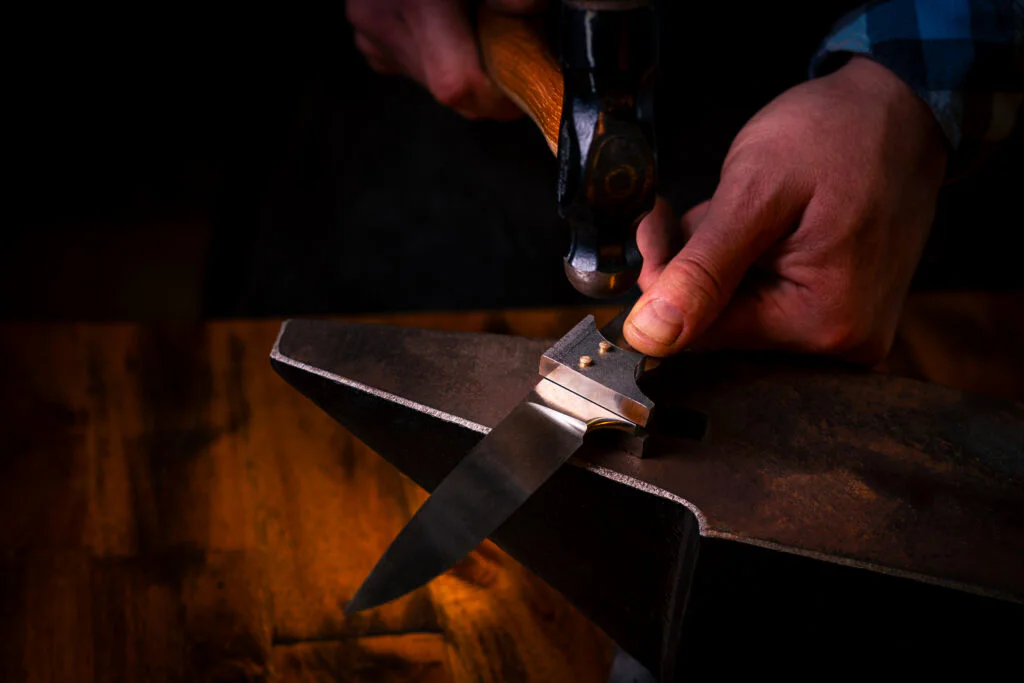
I grind my blades freehand. I don't use jigs, the fixtures that hold a fixed grinding angle. I take the steel in hand, press it against the belt grinder, and guide it by hand over an abrasive belt moving at very high speed. First, it's very easy to make a mistake and ruin the steel in a moment of inattention. Second, it's very hard to achieve a perfectly repeatable grind shape and symmetry between the two sides of the blade. The more mastery you develop, the more consistent the shapes become. But they'll never be identical. A person never performs exactly the same motions every single time. That's why a blade can never come out exactly the same twice.
It's similar with hand engraving. The graver is guided by hand, at varying angles, with varying pressure, at a varying rhythm. You can engrave from the same design, and the result will still be a little different each time. Hand engraving is a multidimensional network of cuts and marks in the steel that give a sense of depth and life. Look at it under a loupe, and it becomes clear whether a machine made it, or a person did.
Laser engraving works by burning a programmed pattern into the metal. Everything happens mechanically — even, repeatable. A laser engraving looks like a printout, because in a sense, it is one. And you can tell.
A machine reproduces. A person creates. A machine is excellent at copying, but it isn't an artist. Only a person can be an artist. A knife made by a person is far more than a working tool. It carries a piece of its maker: a piece of their imperfection, attention, experience, and individuality. And that's beautiful.
A history recorded in an object
The best way to understand real craftsmanship is to get to know the person who made it. Talking about the craft, the techniques, the materials, and the way of working can tell you a lot. But picking the object up and examining it closely tells you even more. That's when you can feel whether you're holding something made with care, or just a product.
But does any of this really matter? Let me tell you the story of one of the first hunting knives I ever made.
A handmade knife for my father
I decided to make my dad a Christmas gift. I wasn't entirely sure I'd pulled it off. I was still early in my journey. But I wanted the knife to show him that I respected him, and that I was grateful to him. I wasn't sure what would happen to it afterward. Maybe it would end up in a drawer with other gifts. But I hoped he'd carry it with him on a hunt.
One day, my mother called me. She told me my father had taken down a wild boar, field-dressed it, skinned it, and broken it down into cuts — all with the knife I'd made him. My father then invited me over. He told me about his night hunt for the boar, and shared some of the meat with me, which I took home, roasted, and we all ate together at Sunday family dinner.
The story of my knife kept going. That knife mattered to someone else — and it came back to me, and to my family, in the form of a healthy meal. My father may not have realized it, but by taking my knife hunting and using it, he gave me enormous joy. That's an emotion on a completely different level. I hope he felt at least a little proud of me. Would that moment have been possible if I'd just bought him some hunting knife and handed it over at Christmas? For me, the answer is obvious.
Why I don't want to compete with mass production
Early in my journey, I thought a lot about which direction to take with knives. I knew I couldn't compete on price with knives mass-produced in factories. That wouldn't make sense. So I decided to go the other way. Make less, but in a way a machine simply can't: with intention, attention, and a piece of myself.
Every stage of making a knife requires focus, concentration, and presence. Of course, it also matters whether you love what you're doing, or you're only doing it because you have to, or purely for the money. Good intentions matter. The story of the person behind the object matters too, even if you can't see it. The maker's story is written into every element of a handmade object. You don't see it right away, but it's there. That's why people say handmade objects have a soul. They carry the maker's soul, and the history of every owner who comes after. A handmade knife that's been in a family for generations holds a great deal more than just steel and wood.
A workshop that isn't meant to become a factory
I like people. I have experience running a business. Over the years, I built teams, learned how to talk to people, how to lead them, and how to take responsibility for them. But I feel my best working alone. By nature, I'm a lone wolf. I like my own company. I need quiet, focus, and space where I can be alone with my work.
When I decided to get into knifemaking, from the start, I wanted it to be a one-person operation. I didn't want it to scale, to grow, to turn into a company that would eventually start to resemble the very thing I once wanted to leave behind. I wanted it to be the project of my life. A project that would end together with my career. Maybe someday I'll find an apprentice. Maybe someone in my family will want to take on some of this knowledge. I can pass along technique, experience, a way of thinking. But my craft is me. I can leave behind a piece of myself, the way a piece of Bob Loveless lives on in me and in my knives, but it will never be exactly the same thing again. That's why I don't want to build a factory. I don't want my knives to be an anonymous product off an assembly line. I want every piece to be an object with a real person, a real story, and real time spent in the workshop, standing behind it.
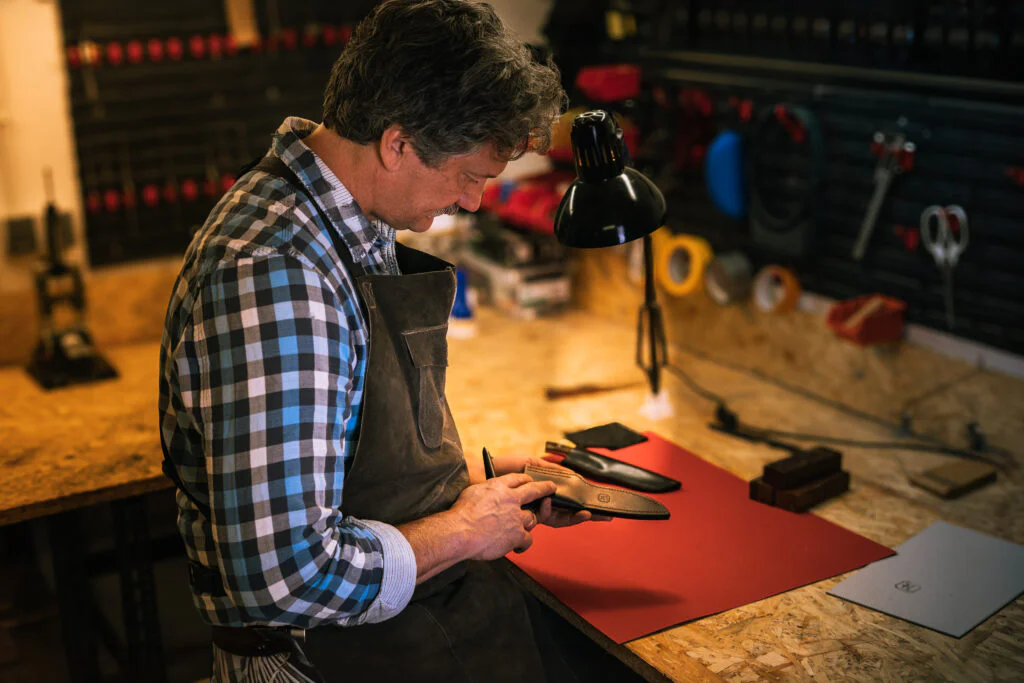
Craft as a path
For me, my craft isn't a business I do purely for the money. My premise was different: if I'm genuinely good at what I do, the money will follow, as a consequence. Not the other way around. Of course, it matters to me that my work lets me make a living. But payment is also, for me, a form of recognition, gratitude, and thanks for an artisan's work. Being an artist and making good money isn't easy these days. But I believe it's possible.
My craft is, for me, a way of living in harmony with myself. Inside, I feel like an artist, and creating with my own hands is my calling. I feel that with my whole being. This work has given me the inner peace I spent years searching for. It's one of the pieces of my life's puzzle that has finally found its place.
I have an introverted nature. A lot happens inside me. There's an ongoing dialogue running, basically nonstop. I feel good in the workshop. Working on knives isn't just physical work. In my head, I'm constantly processing, planning, creating, arranging. Everything starts with a thought. As a kid, I didn't talk much. On the surface, nothing much seemed to be happening, but inside, a constant process was underway. I'm still that way today. I talk more now, and I'm more open, but I still need a lot of time with myself. I've always preferred doing over watching. Playing a sport rather than just watching it. Learning through movement, effort, mistakes, and repetition.
Now my craft is a place where I work in a similar way. I learn from my mistakes, compete with myself, and keep raising the bar. This is a craftsman's path: from apprentice, through journeyman, to master. I'm still learning, all the time. I've attended, and still attend, workshops. I read, I study the work of other knifemakers and master engravers. I try to learn from the best. It's a constant process of striving toward mastery. There's no room to get bored here. There's always something you can do better.
Objects that have a soul
I used to laugh when my grandmother told me to talk to mushrooms so I'd start finding them. I see it differently now. I believe that, on some level, everything is connected. We give off a kind of energy that affects our surroundings, other people, plants, and objects. Now I talk to my knives. It might sound strange, but for me, it feels natural. Every stage of the work demands presence. You have to watch, listen, respond. The material shows you something, pushes back, sometimes takes you somewhere different than you'd planned. Working by hand is a conversation. With the steel, the wood, the tool, and yourself.
For me, handcraft is a way of telling my story to the generations that come after. A way of being remembered, of being thought of. We live for a moment. Often, not much is left behind of us. Our children remember us; maybe our grandchildren too. Great-grandchildren have heard something about us. Then the memory fades. My knives will outlast me by a long time. I hope part of my story will keep living alongside them.